
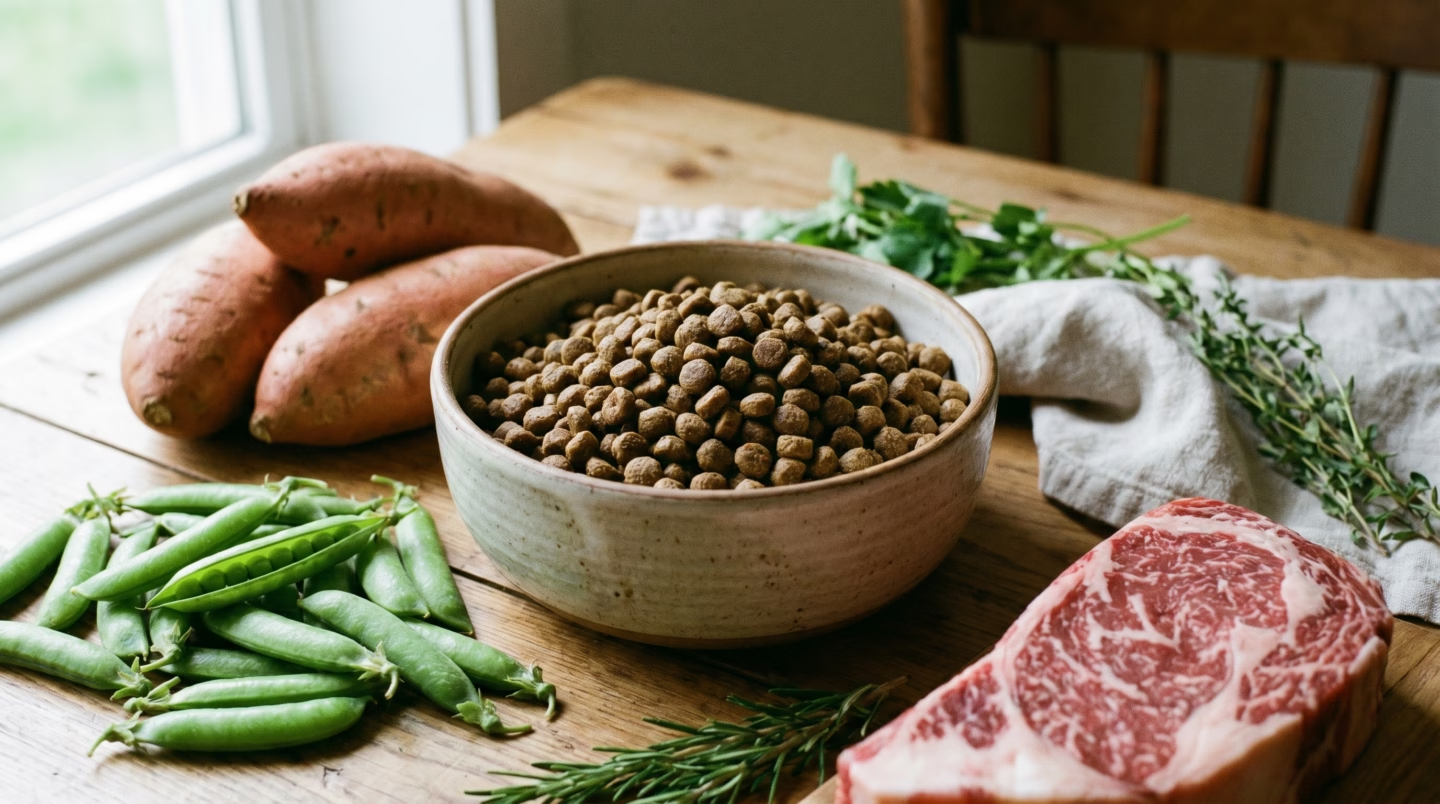
Choosing the best grain free dog food means weighing more than a pretty bag and a high-protein number on the label. Grain-free and limited-ingredient diets remove common grains like corn, wheat, and rice, often leaning on potatoes, peas, or lentils for carbohydrates instead. For some dogs with suspected food sensitivities, a simpler ingredient list can be genuinely useful. But there is an important caveat to raise up front: since 2018, the U.S. Food and Drug Administration has been investigating a possible association between certain diets (frequently grain-free, legume-heavy formulas) and a heart condition called canine dilated cardiomyopathy (DCM). A causal link has not been established. This article is informational, not veterinary advice, so please discuss any grain-free switch with your veterinarian.
We are a careful, label-reading household, not a veterinary clinic. Below you will find three grain-free picks we genuinely like, an even-handed explanation of the DCM discussion, and a practical framework for deciding whether grain-free is right for your individual dog.
Our top picks at a glance
Here is a quick side-by-side look at our three grain-free recommendations. Each name links to our product page, where you can find current details. Prices, ratings, and availability change often, so we do not list them here.
| Pick | Best for | First ingredient | Carb source | Notable |
|---|---|---|---|---|
| Taste of the Wild Grain-Free | Best value | Novel proteins (bison, venison) | Sweet potato, peas | Affordable for grain-free; well-liked palatability |
| Blue Buffalo Wilderness Grain-Free | Most popular | Real meat (e.g., chicken) | Peas, potatoes | High-protein; no corn, wheat, or soy; widely available |
| Merrick Grain-Free Real Texas Beef + Sweet Potato | Best ingredients | Deboned beef | Sweet potato | Added glucosamine and chondroitin; premium |
Taste of the Wild Grain-Free — Best Value
If you want a grain-free recipe that does not punish your wallet, Taste of the Wild is where we point most owners first. Its formulas lean on novel proteins such as bison and venison, which can be appealing if you are trying to avoid the more common proteins your dog may already eat. We have found palatability to be a strong point: even picky eaters tend to take to it, and the kibble pairs roasted-meat flavors with sweet potato and peas for carbohydrates.
It is a sensible entry point into grain-free without the premium-tier price. As with any grain-free diet, the legume content is worth discussing with your veterinarian in light of the ongoing FDA/DCM conversation.
Pros: affordable for grain-free; novel proteins (bison, venison); generally strong palatability; widely stocked. What we don’t love: recipes contain peas and legumes, which are part of the FDA’s DCM inquiry; ingredient sourcing details are less transparent than some premium brands. See our Taste of the Wild Grain-Free page.
Blue Buffalo Wilderness Grain-Free — Most Popular
Blue Buffalo Wilderness is the grain-free formula we hear about most, and for understandable reasons. It is built around real meat as the first ingredient, runs high in protein, and skips corn, wheat, and soy. It is also widely available, which matters when you do not want to scramble for a replacement bag on short notice.
The high-protein, meat-forward profile suits many active dogs. That said, it uses peas and potatoes as primary carbohydrate sources, so it sits squarely within the category the FDA has been examining. Bring it up with your vet before switching.
Pros: real meat first; high protein; no corn, wheat, or soy; easy to find. What we don’t love: pea- and potato-heavy, so the DCM discussion applies; the broad product line can be confusing, with several similar-sounding recipes. See our Blue Buffalo Wilderness page.
Merrick Grain-Free Real Texas Beef + Sweet Potato — Best Ingredients
When the ingredient list is your priority, Merrick’s Real Texas Beef + Sweet Potato earns our nod. Deboned beef leads the formula, sweet potato supplies the carbohydrates rather than a heavy legume blend, and the recipe includes added glucosamine and chondroitin, which owners of larger or older dogs often look for. It is a premium product, and the price reflects that.
We appreciate that sweet potato carries more of the carbohydrate load here, but it is still a grain-free diet, so the same vet conversation applies before you commit.
Pros: deboned beef first; sweet potato as the main carb; added glucosamine and chondroitin; thoughtful overall recipe. What we don’t love: premium pricing that may not fit every budget; still grain-free, so the FDA/DCM context remains relevant. See our Merrick Grain-Free page.
How to choose the best grain free dog food
Picking the best grain free dog food is less about chasing a trend and more about matching a recipe to your individual dog, ideally with your veterinarian’s input. Here is how we think it through.
When grain-free makes sense (and food sensitivities)
True grain allergies in dogs are relatively uncommon; far more sensitivities trace back to specific protein sources. Grain-free and limited-ingredient diets shine when you and your vet are working through an elimination process and want fewer variables. If your dog tolerates grains well and is thriving, there may be no compelling reason to remove them.
The FDA and DCM context, explained factually
In 2018 the FDA announced it was investigating reports of canine dilated cardiomyopathy in dogs eating certain diets, many of them grain-free and high in legumes such as peas and lentils. DCM is a serious heart-muscle disease. Importantly, the FDA has stated that a causal relationship has not been established, and the science is still developing. This is not a reason to panic, but it is a reason to choose deliberately and to keep your veterinarian in the loop, especially for breeds already predisposed to heart disease. You can read the FDA’s own update on grain-free diets and DCM at the FDA’s investigation page.
Protein quality and novel proteins
Look for a named animal protein at or near the top of the ingredient list, such as deboned beef, chicken, bison, or venison. Novel proteins, ones your dog has not eaten much of, can be helpful when sorting out a suspected protein sensitivity. Higher protein is not automatically better for every dog; puppies, seniors, and dogs with certain conditions have different needs your vet can speak to.
AAFCO complete and balanced
Whatever you choose, check the bag for an AAFCO statement confirming the food is “complete and balanced” for your dog’s life stage (growth, maintenance, or all life stages). This indicates the formula is designed to meet established nutrient profiles rather than serving as a supplemental or treat-only product.
Talk to your vet
This is the recurring theme for a reason. Your veterinarian knows your dog’s breed, age, weight, and medical history, and can help you weigh the benefits of a grain-free or limited-ingredient diet against the open questions around DCM. Nothing here replaces that conversation.
How we evaluate
Coverage on this site is documentation-based. We read current manufacturer pages and manuals, ingredient and specification panels, packaging information where it is publicly visible, retailer listings, and applicable regulatory or certification records. We state which source a claim comes from.
A page does not say a product was bought, consumed, worn, brewed, or laboratory-tested unless it publishes a dated protocol, the sample source, the conditions, and the evidence. We do not publish invented prices, stock levels, certifications, ratings, or test results, and product pages carry no star score.
Dog food comparisons focus on the AAFCO nutritional adequacy statement and the life stage it covers, the named protein sources in the first several ingredients, grain-free formulation in the context of the FDA’s ongoing DCM inquiry, and manufacturer transparency such as WSAVA-aligned research and feeding-trial substantiation.
Nothing here diagnoses, treats, or prevents disease, and none of it substitutes for veterinary advice. Your veterinarian knows your dog and should guide any feeding decision.
Frequently asked questions
Is grain-free bad for dogs?
Not inherently. The honest answer is that the science is unsettled. The FDA has investigated a possible association between certain grain-free, legume-heavy diets and DCM, but it has not established that grain-free food causes heart disease. Many dogs eat grain-free diets without apparent issues. Because the question is still open, the responsible move is to choose a complete-and-balanced food and discuss your dog’s specific situation with your veterinarian.
Does my dog need grain-free food?
Most dogs do not need grain-free food. Grains are not harmful to the average healthy dog, and true grain allergies are uncommon. Grain-free and limited-ingredient diets are most useful when you are working through a suspected food sensitivity, ideally under veterinary guidance. If your dog is doing well on a food with grains, there is usually no need to switch.
Grain-free versus limited-ingredient: what’s the difference?
Grain-free simply means the recipe contains no grains; it may still include many other ingredients. A limited-ingredient diet intentionally keeps the total number of ingredients small, often with a single protein and a single carbohydrate, to make it easier to identify what a sensitive dog can tolerate. A food can be one, the other, or both. You can browse our grain-free and limited-ingredient category to compare options.
What are the signs of a food sensitivity in dogs?
Common signs owners notice include itchy skin, recurrent ear issues, paw licking, and digestive upset such as loose stools or excess gas. These symptoms can have many causes unrelated to diet, so do not assume food is the culprit. Your veterinarian can help you run a proper elimination process rather than guessing.
Should I worry about DCM if I feed grain-free?
Worry is not the right frame; informed attention is. Keep your vet aware of your dog’s diet, watch for signs like coughing, lethargy, or reduced exercise tolerance, and raise any concerns promptly. The FDA investigation is ongoing and has not established causation, so this is about staying engaged, not alarmed.
The verdict
For most owners seeking the best grain free dog food, Taste of the Wild is our best-value starting point, Blue Buffalo Wilderness is the most popular meat-forward option, and Merrick Real Texas Beef + Sweet Potato wins on ingredients. All three are grain-free, so the same advice holds: choose a complete-and-balanced formula and talk with your veterinarian about the FDA/DCM context before switching.
If grain-free does not turn out to be the right fit, that is completely fine. Explore more options in our grain-free and limited-ingredient category, or widen the search with our guides to the best dry dog food and the best dog food topper. The right choice is the one that keeps your individual dog healthy, happy, and well-nourished, made together with your vet.