
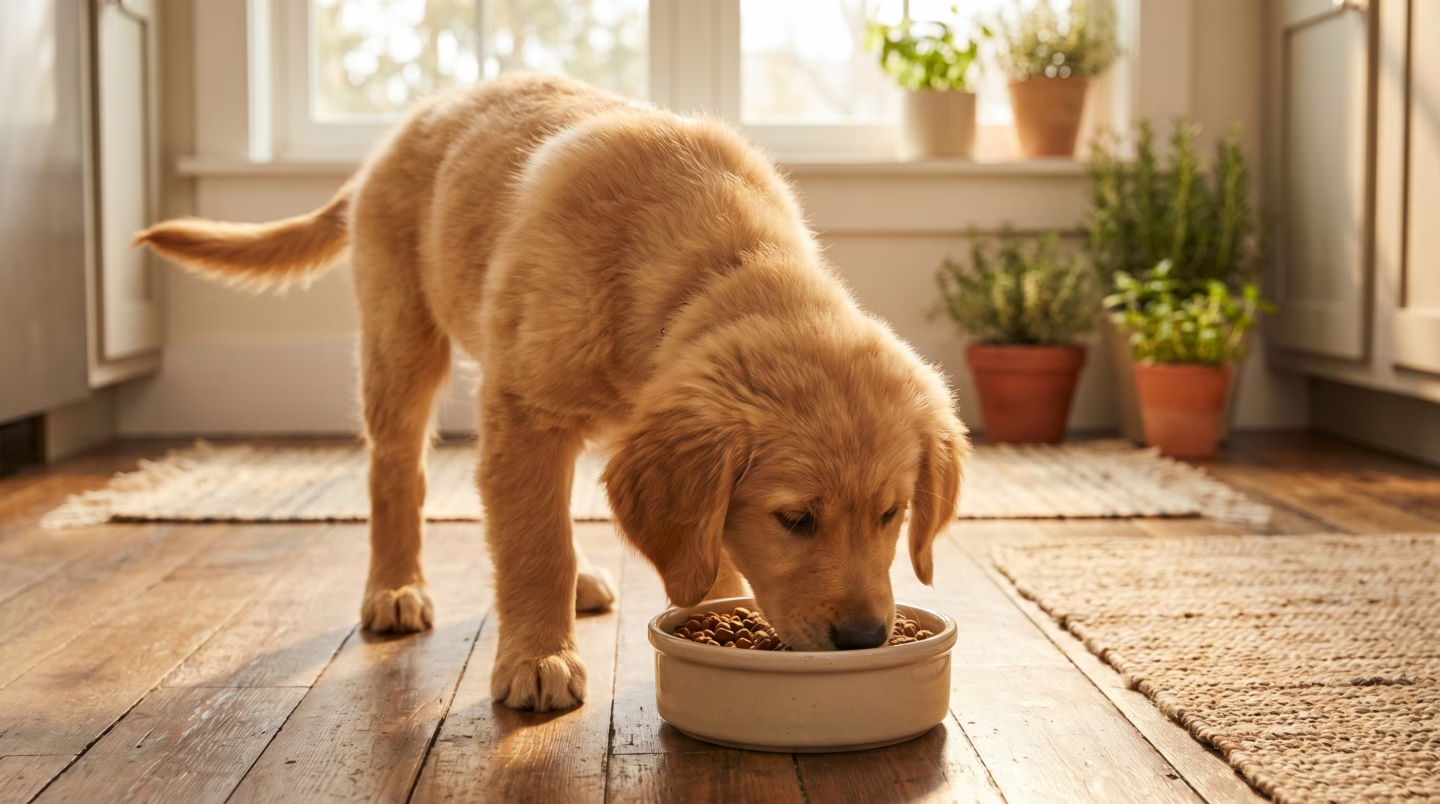
Choosing the best puppy food is one of the first big decisions you’ll make as a new dog owner, and it matters more than most people realize. Puppies aren’t just small adult dogs; they’re growing fast, building bone, muscle, and brain tissue, and they need food specifically formulated for that growth. The right diet supplies balanced calcium and phosphorus, the right calories, and DHA, an omega-3 fatty acid linked to brain and vision development. This guide is informational and reflects careful label reading and research; it is not veterinary advice. Please consult your veterinarian before choosing or switching foods, especially for large-breed puppies, who need formulas designed to control growth rate and protect developing joints.
Our top picks at a glance
All three foods below carry an AAFCO statement indicating they are complete and balanced for growth, and each includes DHA. They differ in price, formulation philosophy, and how breed-specific they get. Product names link to our product pages, where you’ll find current details. Prices and availability change often, so we don’t list them here.
| Food | Best for | Key strengths | Keep in mind |
|---|---|---|---|
| Purina Pro Plan Puppy Chicken & Rice | Best overall | Real chicken first, DHA, research-backed, good value | Contains grains (fine for most puppies) |
| Hill’s Science Diet Puppy | Most trusted | Strong vet trust, tight quality control, DHA, consistent | Premium price |
| Royal Canin Puppy | Best breed-specific | Growth-formulated, highly digestible, breed-specific lines | Expensive; breed lineup can confuse |
Purina Pro Plan Puppy Chicken & Rice — Best overall
If we had to pick one bag for a typical puppy, this is it. Purina Pro Plan Puppy Chicken & Rice leads with real chicken as the first ingredient and includes DHA to support brain and vision development during those critical early months. Purina runs its own research facilities, and this line is widely recommended by veterinarians, which gives us confidence in its consistency. It hits a sweet spot of quality and value that’s hard to beat, making it an easy everyday choice for many households feeding a single, growing puppy.
Pros: Real chicken first; DHA for development; research-backed and vet-popular; reliable quality; strong value.
Cons: Contains grains, which is fine for the vast majority of puppies but may not suit owners specifically seeking grain-free for a documented reason. It’s a mainstream formula rather than a boutique or breed-tailored one, so owners wanting a highly specialized diet may look elsewhere. As always, confirm the formula suits your puppy’s size and check the product page for current details.
Hill’s Science Diet Puppy — Most trusted
Hill’s Science Diet Puppy earns its reputation for trust. Hill’s has deep ties to the veterinary community and maintains tight quality control, which shows up in batch-to-batch consistency. The formula includes DHA from fish oil to support brain and eye development, plus balanced nutrients for steady growth. If your priority is a brand your vet likely knows well and a product that performs the same bag after bag, this is a reassuring pick, particularly for owners who value predictability over experimentation in those formative months.
Pros: Exceptional vet trust; rigorous quality control; DHA included; highly consistent formulation; backed by nutritional research.
Cons: It sits at a premium price point, so it costs more than some equally complete options. That’s the main trade-off; you’re paying partly for the brand’s clinical reputation and consistency. Whether that’s worth it depends on your budget and priorities. Review the product page for the latest formula and size details before buying.
Royal Canin Puppy — Best breed-specific
Royal Canin Puppy stands out for its growth-focused, highly digestible formulas and an unusually deep breed-specific lineup. If you have a purebred puppy, there’s a reasonable chance Royal Canin makes a kibble shaped, sized, and balanced for your breed, which some owners find genuinely useful. The food is engineered for digestibility and steady growth, and many puppies do well on it. It’s a thoughtful option for owners who want a diet tailored more precisely than a one-size-fits-all puppy formula.
Pros: Growth-formulated; highly digestible; broad breed-specific and size-specific lines; engineered for early development.
Cons: It’s expensive, often the priciest of our three picks. The sheer breadth of the breed lineup can also be confusing; it’s easy to second-guess which exact formula fits your puppy. When in doubt, ask your veterinarian, and confirm the right variety on the product page before you commit.
How to choose the best puppy food
Picking the best puppy food comes down to a few non-negotiables and a few personal factors. Start with the label, then match the formula to your puppy’s size and your veterinarian’s guidance. Here’s what we look for, in order of importance.
Look for the AAFCO growth statement
This is the single most important check. On the label, find a nutritional adequacy statement saying the food is “complete and balanced” for “growth” or “all life stages” per AAFCO profiles. “Growth” means it’s formulated for puppies, not just adult maintenance. You can read more about how pet food is regulated and labeled at AAFCO.org. If a food only states “adult maintenance,” it isn’t appropriate as your puppy’s primary diet.
Confirm DHA is included
DHA is an omega-3 fatty acid associated with brain and vision development in puppies, and it’s a feature we look for in any growth formula. All three of our picks include it. It’s often sourced from fish oil and listed on the ingredient panel. While no single nutrient guarantees outcomes, choosing a food that includes DHA is a sensible, well-supported step during your puppy’s fast early growth.
Large-breed vs. small-breed puppy formulas
This distinction matters more than many owners expect. Large- and giant-breed puppies need formulas with carefully controlled calcium and calorie density to support a slower, steadier growth rate that protects developing bones and joints. Feeding a regular or small-breed formula to a large-breed puppy can encourage growing too fast. Small-breed puppies, by contrast, often do best with smaller kibble and calorie-dense food. This is exactly the kind of decision to confirm with your veterinarian, especially for large breeds.
How long to feed puppy food
As a general guide, puppies stay on growth-formula food until they near maturity, then transition to adult food. Smaller breeds tend to mature sooner, often around 9 to 12 months, while large and giant breeds may need puppy or large-breed-puppy food longer, sometimes up to 18 to 24 months. These are rough ranges, not rules. Your veterinarian can advise the right timing for your individual puppy based on breed, size, and body condition.
Ask your veterinarian
We can’t say this enough: this article is informational, not veterinary advice. Your veterinarian knows your puppy’s breed, health history, and growth trajectory, and can recommend or adjust a diet accordingly. Before you settle on a food, especially for a large-breed puppy or one with any health concern, have that conversation. It’s the most reliable way to turn a good general choice into the right specific one.
How we evaluate
Coverage on this site is documentation-based. We read current manufacturer pages and manuals, ingredient and specification panels, packaging information where it is publicly visible, retailer listings, and applicable regulatory or certification records. We state which source a claim comes from.
A page does not say a product was bought, consumed, worn, brewed, or laboratory-tested unless it publishes a dated protocol, the sample source, the conditions, and the evidence. We do not publish invented prices, stock levels, certifications, ratings, or test results, and product pages carry no star score.
Dog food comparisons focus on the AAFCO nutritional adequacy statement and the life stage it covers, the named protein sources in the first several ingredients, grain-free formulation in the context of the FDA’s ongoing DCM inquiry, and manufacturer transparency such as WSAVA-aligned research and feeding-trial substantiation.
Nothing here diagnoses, treats, or prevents disease, and none of it substitutes for veterinary advice. Your veterinarian knows your dog and should guide any feeding decision.
Frequently asked questions
When should I switch my puppy to adult food?
Most puppies switch to adult food as they approach maturity. Small breeds often reach that point around 9 to 12 months, while large and giant breeds may stay on puppy or large-breed-puppy food up to 18 to 24 months. Transition gradually over about a week by mixing increasing amounts of the new food. Because timing depends on your puppy’s breed and growth, confirm the switch with your veterinarian.
Do large-breed puppies need special food?
Generally, yes. Large- and giant-breed puppies benefit from formulas with controlled calcium and calorie density that support a slower, steadier growth rate to help protect developing joints and bones. Feeding a standard formula can encourage growing too quickly. Look for a food labeled for large-breed growth and carrying an appropriate AAFCO growth statement, and talk with your veterinarian about the best choice for your specific puppy.
How much and how often should I feed a puppy?
Young puppies typically eat several small meals a day, often three to four, gradually moving toward two meals as they grow. Portion sizes depend on the food’s calorie density, your puppy’s age, expected adult size, and body condition. Start with the feeding guidelines on the bag as a baseline, then adjust. Your veterinarian can help you set portions that keep your puppy at a healthy, lean weight, and our puppy feeding schedule guide goes week by week. Our dog food calculator gives a starting estimate for puppies using veterinary growth factors.
Is grain-free food good for puppies?
For most puppies, grains are a fine and useful part of a complete diet, and a grain-inclusive food like our top pick works well. Grain-free isn’t automatically better, and it’s a topic that has drawn regulatory attention. If you’re considering grain-free for a specific reason, discuss it with your veterinarian first. For more on this category, see our grain-free dog food guide.
What’s the most important thing to look for on the label?
The AAFCO nutritional adequacy statement confirming the food is complete and balanced for “growth” (or “all life stages”). That single line tells you the food is formulated for puppies rather than adult maintenance. After that, we look for a named animal protein early in the ingredients and included DHA. For more on choosing quality kibble overall, see our best dry dog food guide.
The verdict
For most owners, Purina Pro Plan Puppy Chicken & Rice is the best puppy food to start with: real chicken first, DHA, a strong research and vet reputation, and excellent value. Choose Hill’s Science Diet Puppy if vet trust and rock-solid consistency top your list, or Royal Canin Puppy if you want a breed- or size-specific formula. Whatever you pick, confirm the AAFCO growth statement, mind large-breed needs, and consult your veterinarian. Browse more options in our puppy food category, or explore our best dry dog food and best grain-free dog food guides. This guide is informational and not a substitute for veterinary advice.