
If you’re wondering how much kibble should I feed my dog, the honest answer is that it depends on your specific dog, but you can get very close with two simple steps. Start with the feeding chart printed on your bag of food, then fine-tune from there. Below you’ll find an approximate portion chart, the factors that shift those numbers, and the body-condition checks that matter far more than any scoop.
The Quick Answer
Begin with the manufacturer’s feeding chart for your dog’s current weight. Every bag has one, and it’s calibrated to that food’s calorie density. Then adjust based on your dog’s body condition rather than the number alone. A lean, active dog may need more; a couch-loving senior usually needs less. Think of the chart as a confident first guess, not a final verdict.
Here’s the key mindset shift: calories matter more than scoops. Two foods can recommend wildly different cup amounts because one is more calorie-dense than the other. The cup is a rough tool. Your dog’s waistline and rib feel are the real feedback. Use the chart as a starting point, then watch and adjust over a few weeks.
One more practical tip before the chart: weigh your dog first. Many owners guess the weight, and being off by even ten percent throws the whole calculation off. A home scale works for small dogs if you weigh yourself holding them, then subtract your own weight. For larger dogs, most vet clinics let you use their lobby scale for free, no appointment needed.
Calculate it for your dog
For a figure matched to your dog’s weight, life stage and the exact food you buy, use the calculator below. It is also available as a standalone dog food calculator.
Estimate your dog's daily calories with the standard veterinary formula, then turn that into cups or grams of the food you actually buy. The result is a starting point, not a prescription — your veterinarian and your dog's body condition have the final word.
Your dog
Your dog's food (optional)
US pet food labels carry a calorie statement, usually as kcal/kg and kcal per cup or can. Copy either number from the bag.
Daily estimate
Read this before you change your dog's portions
The Pet Nutrition Alliance, whose factors this calculator uses, stresses that these equations are only estimates and that individual animals can differ from the prediction by as much as 50%. Feed the estimate for two to four weeks, check body condition and weight, then adjust. Dogs with a medical condition, dogs that are pregnant or nursing, and puppies of giant breeds should have their intake set by a veterinarian.
- RER (kcal/day) = 70 × body weight in kg0.75
- MER = RER × life-stage factor (neutered adult 1.6, intact adult 1.8, inactive 1.2–1.4, weight loss 1.0, growth 2–3)
- Cups = MER ÷ kcal per cup · Grams = MER ÷ kcal per kg × 1,000
- Treats: WSAVA recommends keeping treats under 10% of daily calories
Approximate Daily Kibble by Weight
The table below is calculated, not guessed. It uses the standard veterinary formula — resting energy requirement = 70 × body weight in kg0.75, multiplied by 1.6 for a spayed or neutered adult (Pet Nutrition Alliance) — and converts the result into cups for two typical calorie densities. Your bag’s calorie statement tells you which column is closer; the dog food calculator does the maths for your exact food, life stage and activity.
| Dog weight | Daily calories (spayed/neutered adult) | Cups/day at 350 kcal per cup | Cups/day at 400 kcal per cup |
|---|---|---|---|
| 5 lb | 207 | 0.6 | 0.5 |
| 10 lb | 348 | 1.0 | 0.9 |
| 20 lb | 585 | 1.7 | 1.5 |
| 30 lb | 794 | 2.3 | 2.0 |
| 50 lb | 1,164 | 3.3 | 2.9 |
| 70 lb | 1,498 | 4.3 | 3.7 |
| 90 lb | 1,809 | 5.2 | 4.5 |
These are daily totals, not per-meal amounts, and they are estimates: the Pet Nutrition Alliance notes that individual dogs can differ from the formula by as much as 50%. Intact adults need more (about 1.8 × resting energy), inactive dogs less (1.2–1.4 ×). Start here or with the bag’s chart, then adjust to body condition over two to four weeks.
It also helps to know that a “cup” means a standard 8-ounce measuring cup, not a coffee mug or a random scoop. Different kibbles have different piece sizes and densities, so the same measuring cup can hold meaningfully different amounts of food by weight. That’s another reason weighing is more reliable than measuring by volume, especially for small dogs where a small error is a large share of the daily total.
Factors That Change How Much to Feed
No chart fits every dog, because several things move the target up or down. Understanding them helps you read your own dog instead of guessing.
Age and Life Stage
Puppies need more calories per pound for growth and eat on a structured schedule; see our puppy feeding schedule for details. Seniors often need fewer calories as they slow down, though some thin older dogs need more.
Activity Level
A working or sporting dog burning energy on long runs needs noticeably more than a dog whose big event is a short evening walk. Adjust seasonally too, since many dogs move less in winter.
Neuter Status and Metabolism
Spayed and neutered dogs typically need fewer calories, so many gain weight if fed the same as before surgery. Individual metabolism also varies, which is why two same-size dogs can need different amounts.
The Food’s Calorie Density
This is the big one. A calorie-dense kibble means smaller portions; a lighter formula means larger ones. That’s why switching foods changes the math entirely. If you’re changing brands, do it gradually using our guide on how to switch dog food, and recalculate from the new bag’s chart.
Body Condition Score: The Check That Matters Most
Forget the scoop for a moment and put your hands on your dog. You should be able to feel the ribs easily with light pressure, the way you feel the back of your hand, without a thick fat layer over them. From above, look for a visible waist that tucks in behind the ribs. From the side, the belly should tuck up rather than hang level.
If ribs are hard to find, trim the portion slightly. If they’re sharply visible and the waist looks gaunt, add a little. The WSAVA body condition score system is a helpful, vet-backed visual guide. You can review it at WSAVA’s global nutrition guidelines. Re-check every couple of weeks and adjust in small steps.
How Many Meals Per Day
Most adult dogs do well on two meals a day, splitting the daily total in half. Two meals help with steady energy and can reduce begging compared with one large feeding. Some large or deep-chested breeds benefit from smaller, more frequent meals, so ask your vet if that applies to your dog. Whatever you choose, measure the full day’s amount first, then divide it, so treats and meals together stay within the plan.
Common Overfeeding Mistakes
Small habits add up fast, and weight creeps on quietly. These are the usual culprits.
- Free-feeding: leaving a full bowl out all day makes intake impossible to track and often leads to overeating.
- Treats that aren’t counted: treats, chews, and table scraps should stay under roughly ten percent of daily calories, and they count toward the total.
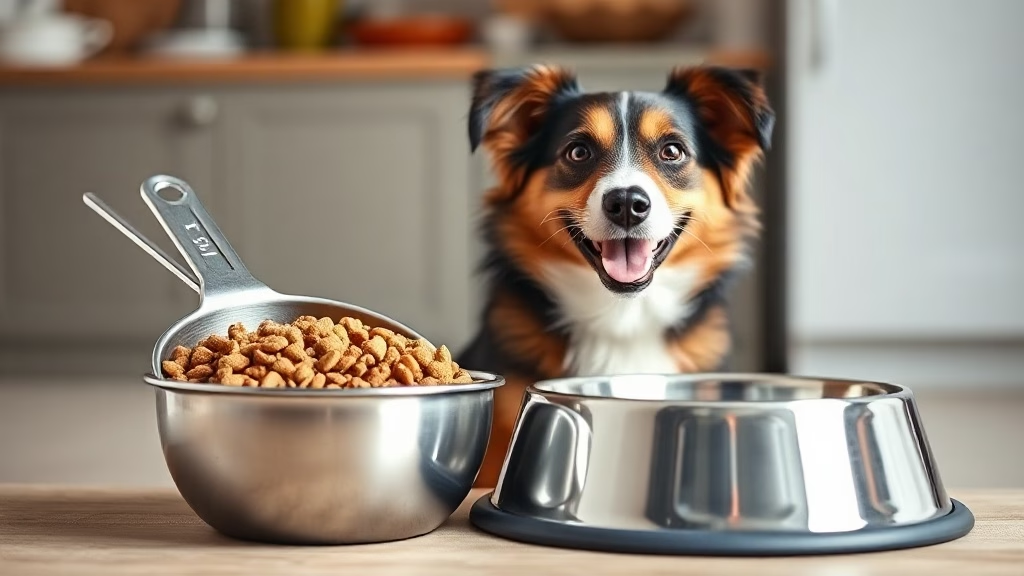
- Eyeballing portions: a casual scoop can be off by a lot. Use an actual measuring cup, or weigh the food with a kitchen scale for the best accuracy.
- Forgetting to recalculate: after a food change, a spay or neuter, or a drop in activity, the old amount may now be too much.
- Topping with rich extras: a spoon of canned food, cheese, or peanut butter adds calories fast, so subtract those from the kibble or keep them tiny.
When to Ask Your Vet
This article is informational and not veterinary advice. Talk with your vet if your dog is losing or gaining weight despite careful feeding, has a health condition, is pregnant or nursing, is a growing puppy, or seems persistently hungry or uninterested in food. Your vet can set a precise calorie target and rule out medical causes. For broader food selection help, see our pillar guide to the best dry dog food.
Frequently Asked Questions
How much kibble should I feed my dog if the bag and the chart disagree?
Trust the bag’s chart, because it’s matched to that food’s calorie density. This article’s table is a general starting point; your specific formula is more precise.
Should I measure by cups or by weight?
Weighing with a kitchen scale is the most accurate. A measuring cup is fine and far better than eyeballing, but scooping straight from the bag tends to over-pour.
How fast should my dog lose weight if overweight?
Slow and steady is safest. Make small reductions, re-check body condition every couple of weeks, and let your vet guide a target so you avoid cutting too sharply.
Does a more expensive kibble mean smaller portions?
Not necessarily. Portion size tracks calorie density, not price. Always read the feeding chart on the bag you actually buy, such as the chart on our Purina Pro Plan dry food page.
The Bottom Line
Start with your bag’s feeding chart for your dog’s weight, divide it into two meals, and then let your dog’s body condition do the final tuning. Feel for ribs, look for a waist, count the treats, and measure honestly. Recheck every couple of weeks and adjust in small steps. Do that consistently and you’ll keep your dog at a healthy weight, with your vet as your partner for anything beyond the basics.