
Buying dog food in bulk saves money, but a large bag sitting open for six or eight weeks faces a much longer freshness challenge than a small bag used up in a week or two. The storage principles are the same as any kibble (see our general kibble storage guide for the underlying why), but large bags need a setup that actually holds up over that longer timeline.
Why Bag Size Changes the Storage Problem
The original packaging on most dry dog food is designed to protect the food until it’s opened, not necessarily for weeks of repeated opening and closing after that. Every time you open the bag or a storage container, you expose the remaining food to oxygen and ambient humidity — and with a 30–40 lb bag lasting a large dog’s household 6–8 weeks, that’s a lot more open-and-close cycles than a 10-lb bag lasting two weeks.
The Core Setup: Keep the Original Bag, Add a Container
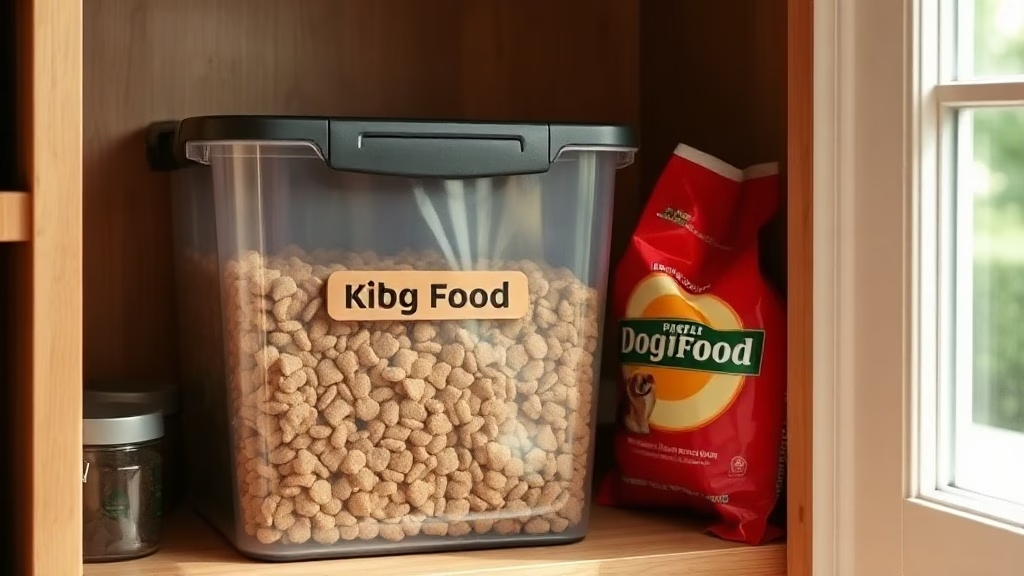
The single most effective practice, regardless of container type: keep the kibble in its original bag, and place that whole bag inside your storage container rather than pouring loose kibble directly in. The original bag has a fat-resistant liner that protects against oxidation better than most storage container materials on their own, and keeping it intact preserves the lot number and best-by date printed on the bag for reference (important if a recall is ever announced — see our recall-checking guide).
Container Options for Large Volumes
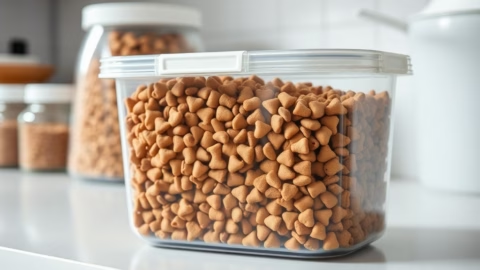
- Airtight bins with a gasket seal (rubber or silicone seal in the lid) are the most effective option — look for a genuine compression seal, not just a snap-on lid, since a real seal is what actually limits oxygen and humidity exchange. Food-grade plastic or stainless steel both work; stainless steel has the added benefit of being naturally resistant to pest issues that can affect plastic over long-term storage.
- Wheeled bins are worth the extra cost for large bags specifically — a 30-lb container is awkward and heavy to move for refilling the daily bowl, and a wheeled base makes it far more practical to keep the container somewhere convenient rather than a hard-to-reach spot.
- Avoid simply clipping the original bag shut as your only storage method for a large bag — a chip clip or bag clip is fine for a few days, but across 6–8 weeks, it doesn’t provide a reliable enough seal against oxygen and moisture for the entire duration.
Where to Store the Container
Cool, dry, and away from direct sunlight or heat sources (not next to the oven, water heater, or a sunny window) — heat and light both accelerate fat oxidation. A pantry, mudroom, garage (if temperature-stable and pest-free), or a dedicated cabinet all work, as long as the location doesn’t experience significant temperature swings or humidity.
Avoid storing directly on concrete floors in a garage or basement without a barrier — concrete can transmit moisture and temperature swings more than a shelf or elevated surface, which matters more over the extended timeline of a large bag than it would for something used up quickly.
Portioning Strategy for Large Bags
Consider splitting a large bag into a smaller daily-use container (a few days’ to a week’s worth) plus a larger backup container for the remainder, opened less frequently. This limits how often the bulk of your supply is exposed to air, since only the small daily container gets opened multiple times per day while the main supply stays sealed until it’s time to refill the smaller one. This two-container approach meaningfully reduces total oxygen exposure across the full 6–8 week period compared to opening one large container every single day.
Signs Your Storage Setup Isn’t Working
If kibble smells noticeably different (flat, slightly rancid, or “off”) by the later weeks of a large bag compared to when you first opened it, or if your dog becomes less enthusiastic about meals as the bag empties despite no other changes, your storage setup likely isn’t protecting freshness adequately across the full timeline — worth upgrading to a better-sealed container or the two-container portioning strategy above.
See our portion chart to help calculate how long a given bag size will realistically last your dog, which helps you judge whether a bulk purchase makes sense for your storage setup and household size.