
Pet food recalls happen for reasons ranging from mild labeling errors to serious contamination (salmonella, aflatoxin, elevated vitamin D, foreign material). Most owners only find out after feeding a recalled product for days or weeks, simply because checking isn’t part of most people’s routine. Here’s how to actually stay ahead of it.
Recent Recalls — July 2026
Two notable recalls are active as of this writing. Both are confirmed through FDA and news sources — here’s exactly what happened with each, so you can check your own pantry against the specifics rather than a vague headline.
Pedigree Wet Dog Food (Mars Petcare, July 2, 2026)
Mars Petcare voluntarily recalled two lots of Pedigree Can High Protein Chopped Chicken & Duck Flavor, 13.2oz wet dog food. Affected lot codes: 613C3KKCFC and 613C1KKCFC.
This recall is unusual in its cause: the product had already failed Mars Petcare’s own quality control and was sent to a third party for destruction, but was reportedly fraudulently redistributed back into the marketplace instead. The concern is potential sharp metal and plastic foreign material in the cans, which can pose a choking, laceration, or gastrointestinal blockage risk. No illnesses had been reported at the time of the recall. If you have either lot code, don’t feed it — contact Pedigree for a replacement, and see a veterinarian if your dog has already eaten it and shows any signs of distress. Source: FDA recall notice.
Albright’s Raw Pet Food — Salmonella (Fort Wayne, Indiana)
Albright’s Raw Pet Food voluntarily recalled its Chicken Recipe for Dogs Complete and Balanced after routine FDA sampling tested positive for Salmonella. The product was distributed in Wisconsin, New York, California, North Carolina, South Carolina, and Massachusetts. No illnesses had been reported at the time of the recall, though testing was still ongoing. If you have this product, don’t feed it to your pet — dispose of it (or destroy it) somewhere pets and wildlife can’t access it. Salmonella is also a human health risk from handling contaminated pet food, so wash your hands thoroughly after handling and disinfect any surfaces the product touched. Source: NBC Chicago.
Both recalls are voluntary and reflect the food-safety system working as intended — problems were caught and disclosed before becoming a widespread health issue. Neither should be read as a reason to distrust the brands generally; see the “Are Certain Brands More Recall-Prone?” section below for how to think about recall frequency in context.
Where Recalls Are Actually Announced
There is no single universal recall database that instantly captures everything, but a few sources cover the vast majority of US pet food recalls:
- FDA Recalls & Withdrawals page (fda.gov, animal & veterinary section) — the most authoritative source, since FDA oversight applies to pet food safety broadly. This is the first place to check for anything serious enough to involve a federal agency.
- The manufacturer’s own website — most major pet food companies maintain a recall or product alert page, and voluntary recalls (which make up most pet food recalls) are often announced there before or alongside the FDA listing.
- AAFCO’s consumer resources — while AAFCO itself doesn’t issue recalls, it links to relevant regulatory resources and is a good starting point if you’re unfamiliar with how pet food oversight works. See our AAFCO explainer for how the organization fits into the bigger picture.
How to Actually Stay Informed Without Checking Manually Every Week
Manually checking multiple sites regularly isn’t realistic for most people, so a more sustainable approach:
- Sign up for FDA email alerts specifically for animal & veterinary recalls — the FDA’s subscription service sends notifications as they’re issued, rather than requiring you to check a page proactively.
- Follow your specific brand’s social media or email list if you feed the same food consistently — most companies push recall announcements through these channels quickly, since delayed communication creates liability and trust problems for them.
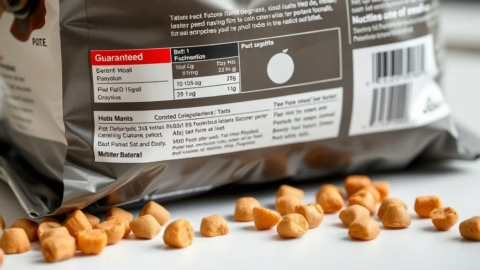
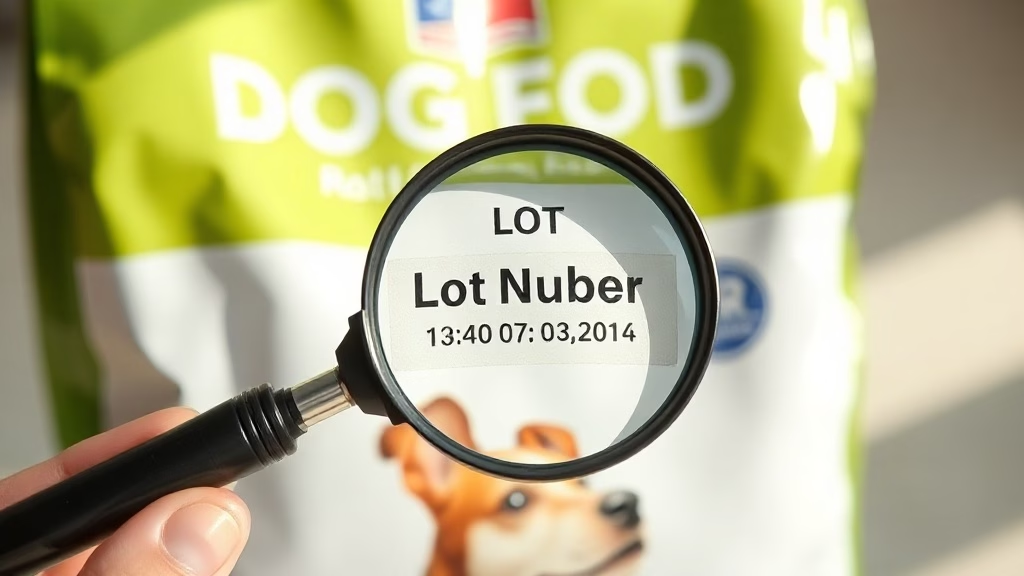
- Keep the lot number and best-by date from your current bag (photograph the relevant panel when you open a new bag) — recalls are usually specific to production batches, not entire product lines, so having this information on hand lets you check quickly and accurately if you hear about a recall rather than guessing whether your specific bag is affected.
What to Do If Your Food Is Recalled
- Stop feeding it immediately, even if your dog seems fine — some contamination risks (like aflatoxin or elevated vitamin D) cause cumulative or delayed harm rather than immediate visible symptoms.
- Check your dog for symptoms relevant to the specific recall reason (the recall notice usually lists what to watch for — lethargy, vomiting, diarrhea, increased thirst/urination are common across many recall types). Contact your veterinarian if you notice any of these, and mention the recall specifically.
- Don’t just switch to a new food immediately without a transition plan — even in a recall situation, an abrupt switch can cause digestive upset on top of whatever the recall concern was. See our 7-day switching guide unless your vet advises an immediate change for safety reasons.
- Save the packaging and receipt if possible — most recalls include a refund or replacement process that requires proof of purchase and the affected lot number.
Are Certain Brands More Recall-Prone?
Recall frequency data is publicly available but easy to misread — larger manufacturers producing more total volume and more product lines will show up in recall counts more often than small manufacturers, without that necessarily meaning their per-unit safety record is worse. A more useful signal than raw recall count is how a company handles a recall when one happens: fast, clear communication and a straightforward refund process are markers of a company taking food safety seriously, versus companies that are slow to acknowledge or communicate about problems.
Bottom Line
Recalls are a normal part of the pet food industry, not a sign that dog food in general is unsafe — the oversight system catching and announcing problems is the system working as intended. The practical goal isn’t anxiety about recalls, it’s building a simple habit (email alerts, saving lot numbers) that lets you respond quickly on the rare occasion it actually matters.