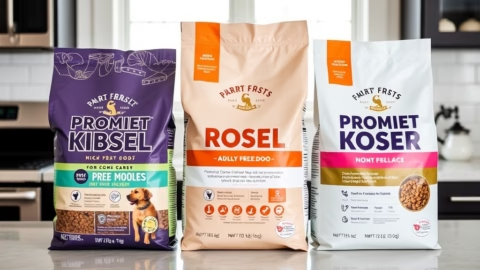

Learning how to read a dog food label is the single most useful skill a dog owner can pick up, because the label tells you far more than the glossy front of the bag ever will. The front is marketing: a happy dog, a windswept meadow, words like “wholesome” and “premium.” The real story lives on the back and side panels, where federal and state rules require specific, verifiable information. Once you know where to look, you can compare two foods honestly in about two minutes. This guide walks through five steps, explains what “complete and balanced” actually means, and flags the marketing words that carry no legal weight at all.
A quick, honest note before we start: this is informational, not veterinary advice. We read labels carefully, but we are not vets. Your dog’s age, weight, and health history matter, so use this as a way to ask your veterinarian better questions, not as a replacement for their guidance.
Step 1: Find the AAFCO Nutritional Adequacy Statement
This is the most important sentence on the entire package, and it is usually tucked away in small print near the ingredient panel. The Association of American Feed Control Officials (AAFCO) sets the model nutrient profiles that most states adopt into law. The adequacy statement tells you whether a food is actually a meal or just a snack.
What the statement looks like
You are looking for wording such as: “[Brand] is formulated to meet the nutritional levels established by the AAFCO Dog Food Nutrient Profiles for [life stage].” Or a stronger version: “Animal feeding tests using AAFCO procedures substantiate that [Brand] provides complete and balanced nutrition.” The feeding-trial wording means the food was actually fed to dogs, which many owners consider a higher bar than formulation alone.
Match the life stage to your dog
The statement names a life stage: “growth” (puppies), “maintenance” (adults), or “all life stages.” There is no separate AAFCO profile called “senior,” so senior foods are formulated to the adult maintenance profile. If you have an older dog, see our guide to the best senior dog food for how good brands tailor maintenance recipes for aging joints and kidneys. If the bag says “intended for intermittent or supplemental feeding only,” it is not a complete diet and should not be your dog’s sole food.
Step 2: Read the Ingredient List Correctly
Ingredients are listed in descending order by weight, including their water content before cooking. That single rule explains most of the confusion owners run into, so it is worth slowing down here.
Why order can mislead you
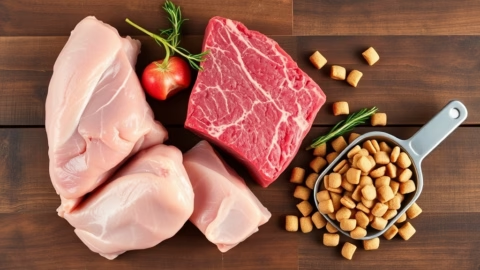
Fresh chicken is roughly 70% water. Because it is weighed wet, it often lands at the top of the list even though much of that weight cooks off. A dry “chicken meal” further down may actually contribute more protein, since meal is rendered and already has the moisture removed. So “first ingredient: chicken” sounds great but does not automatically mean the most protein.
Named proteins versus vague terms
Look for named animal sources: “chicken,” “lamb meal,” “salmon.” Be more cautious with generic terms like “meat meal” or “animal fat,” which do not identify the species. Meat versus meal is not good versus bad; it is wet versus rendered. Many excellent foods combine both. Splitting—listing “ground corn,” “corn gluten,” and “corn bran” separately so each appears lower—is a labeling tactic worth watching for. If grain is your concern, weigh the trade-offs in our look at grain-free dog food pros and cons.
Step 3: Check the Guaranteed Analysis
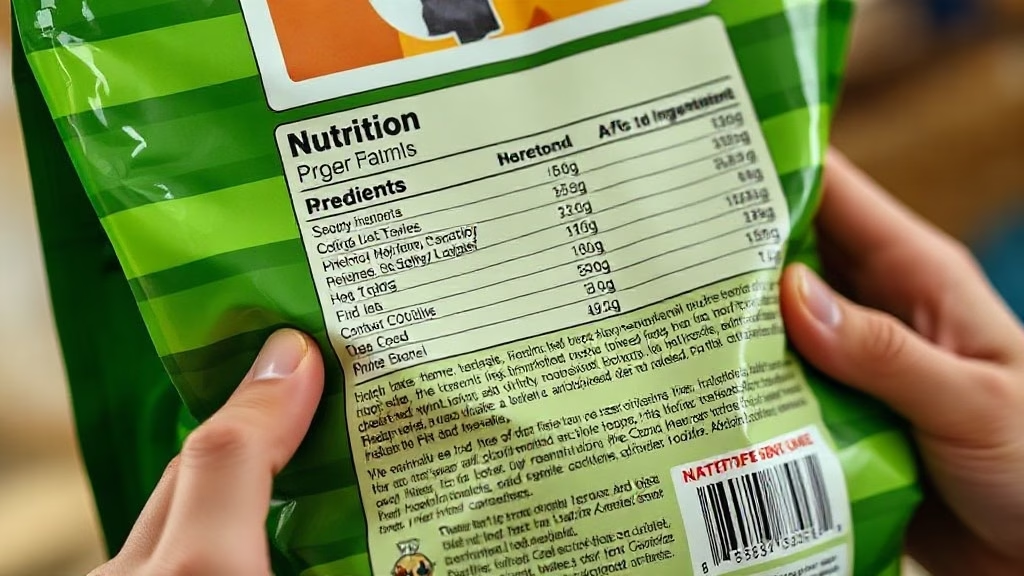
The guaranteed analysis is a small table listing the minimums and maximums for key nutrients. By law it must show at least crude protein (minimum), crude fat (minimum), crude fiber (maximum), and moisture (maximum). “Crude” refers to the testing method, not quality.
Comparing foods fairly
Here is the catch: you cannot compare a kibble to a canned food using these numbers directly, because moisture differs so much. A dry food at 10% moisture and a wet food at 78% moisture look wildly different on paper. To compare honestly, convert to a dry-matter basis by subtracting moisture, or simply compare dry to dry and wet to wet. Within the same category, the guaranteed analysis is a quick, reliable gut check on protein and fat levels.
Step 4: Read the Calorie Content Statement
Most complete dog foods are required to state calorie content, expressed as kilocalories per kilogram and usually per cup or per can too (for example, “3,600 kcal/kg, 360 kcal/cup”). This number matters more than many owners realize. Enter that figure into our dog food calculator to turn it into a daily portion in cups or grams.
Two foods can have nearly identical guaranteed analyses but very different calorie densities. A more calorie-dense food means smaller portions, which changes how long a bag lasts and how easy it is to overfeed. The calorie statement is also the foundation for figuring out portions, which we cover in detail in our piece on the best dry dog food options and feeding math. If your dog is gaining or losing weight unexpectedly, this is the first number to revisit with your vet.
Step 5: Read the Feeding Guidelines and Manufacturer Info
The feeding chart gives suggested daily amounts by body weight. Treat these as starting points, not prescriptions—they are generous by design, and many dogs need less. Watch your dog’s body condition over a few weeks and adjust. Activity level, spay/neuter status, and age all shift the real number.
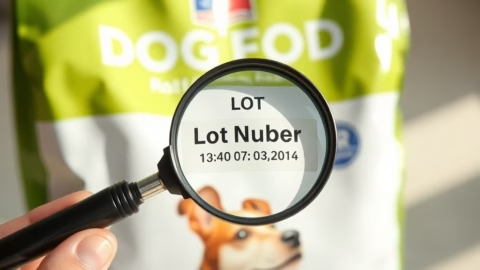
Then find the manufacturer information: a name and address are required, and reputable companies add a phone number, website, and lot code. A brand that makes it easy to ask “where is this made and who formulated it?” is showing transparency. As a practical example of a clearly labeled, feeding-trial-substantiated option, see the panel on the Hill’s Science Diet Adult product page, which spells out its AAFCO statement and contact details.
What “Complete and Balanced” Really Means
“Complete and balanced” is not a marketing flourish; it is a defined claim tied directly to the AAFCO statement from Step 1. “Complete” means the food contains every nutrient a dog needs. “Balanced” means those nutrients are present in the correct proportions to each other. A food can only make this claim if it meets an AAFCO nutrient profile or passes an AAFCO feeding trial for the named life stage.
This is also why “complete and balanced for maintenance” should not be fed long-term to a growing puppy: the proportions of calcium, phosphorus, and calories differ for growth. The claim is only as meaningful as the life stage attached to it. For the official consumer breakdown of these terms, AAFCO publishes a plain-language guide at AAFCO.org.
Marketing Words With No Legal Meaning
Some of the most prominent words on the bag are the least regulated. Knowing which ones to ignore saves money and worry.
Premium and super-premium have no legal definition for pet food—any product can use them, regardless of ingredient quality. Holistic is similarly undefined and unenforced. Natural does have an AAFCO guideline (roughly, no artificial flavors, colors, or preservatives), but it is not the same as “organic,” which is regulated separately by the USDA.
Human-grade is the nuanced one. It is a legitimate term, but it carries strict requirements: every ingredient and the entire manufacturing process must meet standards for human food production. Many products imply it without qualifying, so look for a clear statement rather than a suggestive image. When a word is doing a lot of emotional work on the front of the bag, check whether the back panel backs it up.
Frequently Asked Questions
What is AAFCO?
AAFCO is the Association of American Feed Control Officials, a nonprofit of state and federal regulators. It does not test, approve, or certify individual foods. Instead, it sets the model nutrient profiles and ingredient definitions that states adopt into law, which is why its statement on the label is the standard reference point for adequacy.
Are by-products good or bad?
By-products are simply the parts of an animal beyond plain muscle meat—organs like liver, spleen, and kidney, which are nutrient-dense and eaten by wild canines first. The term sounds unappealing, but quality varies by source, not by the word itself. Named by-products (“chicken by-product meal”) are more transparent than generic ones. They are neither automatically bad nor a red flag.
Should the first ingredient be meat, not water?
Not necessarily. Because ingredients are listed by pre-cooking weight, fresh meat is heavy with water and often appears first even when a rendered meal contributes more actual protein. Reading the first ingredient alone is unreliable; read the whole list together with the guaranteed analysis and the AAFCO statement.
Is more protein always better?
No. Dogs need adequate, high-quality protein, but more is not automatically better and can be inappropriate for dogs with certain kidney or liver conditions. The right protein level depends on your dog’s life stage, activity, and health. This is exactly the kind of question to bring to your veterinarian rather than chasing the highest number on the shelf.
Conclusion
Reading a dog food label is a five-step habit: confirm the AAFCO adequacy statement and life stage, decode the ingredient list, sanity-check the guaranteed analysis, note the calorie content, and review the feeding guidelines and maker. Do that, and the marketing words lose their grip—you are buying nutrition, not a meadow. Use these steps to narrow your options, then confirm the right choice for your individual dog with your veterinarian, who can weigh in on age, weight, and any health concerns the label can never see.