
Understanding grain free dog food pros and cons starts with separating marketing from evidence, because few pet-food categories are as misunderstood as this one. Some dogs genuinely benefit from skipping grains, while most do perfectly well with them. This guide is informational and not veterinary advice, so please consult your vet about your individual dog. We will walk through what grain-free actually means, five potential upsides, four honest drawbacks, and the current research, including the FDA’s ongoing look at a possible link to a heart condition. The goal is a careful, even-handed picture you can take to your vet.
What grain-free dog food actually is
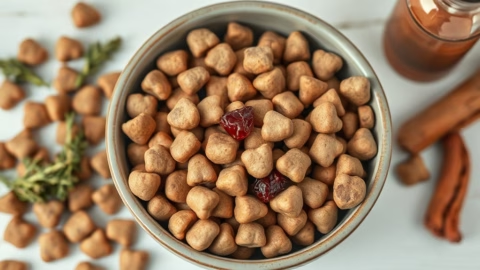
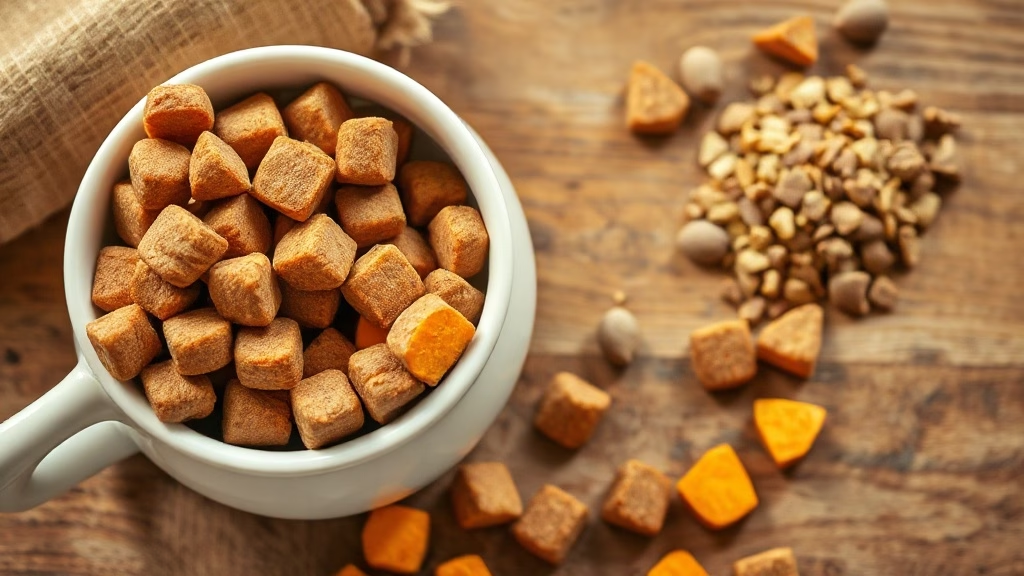
Grain-free recipes leave out cereal grains such as corn, wheat, rice, barley, and oats. They do not leave out carbohydrates. Instead, manufacturers usually swap grains for other sources like peas, lentils, chickpeas, potatoes, or sweet potatoes. So grain-free is not the same as low-carb or carb-free, a point that surprises many owners reading labels for the first time.
Whether a food contains grains or not, the more important question is whether it is complete and balanced. Look for an AAFCO statement on the package confirming the food meets nutrient profiles for your dog’s life stage. If you are unsure how to find that, our guide on how to read a dog food label walks through it step by step.
5 pros of grain-free dog food
Grain-free diets can offer real advantages in specific situations. Here are five worth weighing.
1. Helpful for true grain sensitivities
A small number of dogs have a genuine sensitivity or allergy to a specific grain. For these dogs, a carefully chosen grain-free recipe may help reduce symptoms like itching or digestive upset. True grain allergies are relatively uncommon, though, and most food allergies in dogs trace back to animal proteins rather than grains, so a vet diagnosis matters before switching.
2. Room for novel proteins
Many grain-free lines are built around novel or single-source proteins such as bison, venison, or salmon. For dogs working through an elimination diet under veterinary guidance, this variety can make it easier to find a recipe that avoids known trigger ingredients while still meeting nutritional needs.
3. Often high in protein and palatable
Some grain-free formulas emphasize higher protein content, which many dogs find tasty. Picky eaters or active dogs may take well to these recipes. Higher protein is not automatically better for every dog, but for the right dog it can support a strong appetite and enthusiasm at mealtime.
4. Fewer fillers for some recipes
Certain grain-free products are formulated to limit low-value fillers, focusing instead on named meats and whole-food carbohydrates. For owners who prefer a shorter, recognizable ingredient list, this can be appealing, though “filler” is a marketing term more than a nutritional one, and grains themselves are not inherently fillers.
5. Marketing-driven variety and choice
The popularity of grain-free has expanded the market considerably, giving owners more textures, protein options, and price points to choose from. More choice can help you find something that fits your dog’s preferences and your budget, even if the grain-free label itself is not the deciding nutritional factor.
4 cons of grain-free dog food
The drawbacks deserve equal, careful attention, especially the heart-health research.
1. The FDA investigation into a possible DCM link
Beginning in 2018, the U.S. Food and Drug Administration announced it was investigating a potential association between certain diets and canine dilated cardiomyopathy (DCM), a serious heart condition. Many of the reported cases involved grain-free foods or recipes heavy in legumes. Importantly, a causal link has not been established, and the science is still evolving. You can read the agency’s own summary on the FDA grain-free diet and DCM investigation page.
2. Concerns about legumes and peas
Because grain-free recipes often rely on peas, lentils, and other legumes as primary ingredients, these pulses have drawn particular scrutiny in the DCM discussion. Researchers are still working to understand whether and how high legume content might affect heart health. Until more is known, many experts suggest caution with legume-heavy formulas, particularly when they appear high on the ingredient list.
3. Not needed for most dogs
The majority of dogs digest grains well and have no medical reason to avoid them. For these dogs, going grain-free offers no proven nutritional advantage and may simply add cost or, depending on the recipe, raise the legume questions noted above. Grains like rice and oats can be perfectly wholesome parts of a balanced diet.
4. Often more expensive
Grain-free foods frequently carry a higher price than comparable recipes with grains. If your dog has no specific need for a grain-free diet, that premium may not buy meaningful benefit. Budget is a fair factor to weigh alongside your dog’s actual health requirements.
What vets generally say
Veterinary consensus tends to land in a measured place. Most dogs do just fine on diets that include grains, and grains are not the dietary villain some marketing implies. Grain-free is generally most appropriate when there is a specific, vet-identified reason, such as a diagnosed sensitivity managed through an elimination trial.
Many vets also encourage owners to stay aware of the ongoing DCM research rather than panic over it, since causation remains unproven. A reasonable, qualified approach is to choose an AAFCO complete-and-balanced food, be cautious with legume-heavy grain-free recipes, and bring any questions about your dog’s heart health or diet to your veterinarian. If you want to compare options, our best grain-free dog food roundup and our best dry dog food guide can help you see the landscape.
Who should consider grain-free?
Dogs with a vet-diagnosed grain sensitivity, those on a guided elimination diet, or dogs whose veterinarian has recommended a specific recipe are the clearest candidates. For a widely available option in this space, you can review the Taste of the Wild grain-free formula on our product page. As always, loop in your vet before making a switch.
Frequently asked questions
Is grain-free dog food bad for dogs?
Not inherently. Many dogs do well on grain-free food. The FDA is investigating a possible association between some grain-free or legume-heavy diets and DCM, but causation has not been established. Choosing an AAFCO complete-and-balanced recipe and talking with your vet are sensible steps.
Do dogs need grain-free food?
Most dogs do not. Grains are digestible and nutritious for the majority of dogs. Grain-free is best reserved for dogs with a specific, vet-identified reason rather than chosen as a default.
What is DCM in dogs?
Dilated cardiomyopathy is a serious heart-muscle disease. The FDA has been studying whether certain diets may be associated with cases in dogs not otherwise prone to it, though a direct cause has not been confirmed. Any heart-health concerns should go to your veterinarian.
Is grain-free the same as low-carb?
No. Grain-free recipes typically replace grains with other carbohydrate sources like peas, lentils, or potatoes, so they are not necessarily lower in carbohydrates.
The honest summary of grain free dog food pros and cons is that it can be a thoughtful choice for some dogs and an unnecessary expense for others. Read labels, favor AAFCO complete-and-balanced foods, keep an eye on the evolving DCM research, and let your veterinarian guide decisions for your individual dog. This article is informational and not a substitute for professional veterinary advice.