
A dog that suddenly refuses kibble is not necessarily being stubborn. Palatability fatigue, a subtle health issue, or simply preferring more aromatic food are all common, ordinary explanations. A good topper strategy solves the immediate mealtime problem without undermining the nutritional balance of the dog’s actual diet.
Sudden appetite loss, especially with other symptoms (lethargy, vomiting, weight loss), should be evaluated by a veterinarian before you assume it’s pickiness. This article covers ordinary food-boredom pickiness in an otherwise healthy dog.
Why Dogs Get Picky
Unlike humans, dogs rely heavily on smell rather than taste to find food appealing — their sense of smell is estimated to be tens of thousands of times more sensitive than ours, while they have comparatively few taste buds. This is why a topper’s primary job is usually to boost aroma, not necessarily flavor in the human sense.
Common causes of picky eating in healthy dogs: monotony (the same kibble for years with no variety), free-feeding (food left out all day reduces hunger-driven motivation to eat promptly), overfeeding treats, or a batch of kibble that has gone slightly stale — see our guide to kibble storage if the food has been open for more than a few weeks.
What a Good Topper Does
The best toppers add moisture and aroma without significantly diluting the nutritional balance of a complete-and-balanced kibble. Categories worth trying, roughly in order of how much they change the meal:
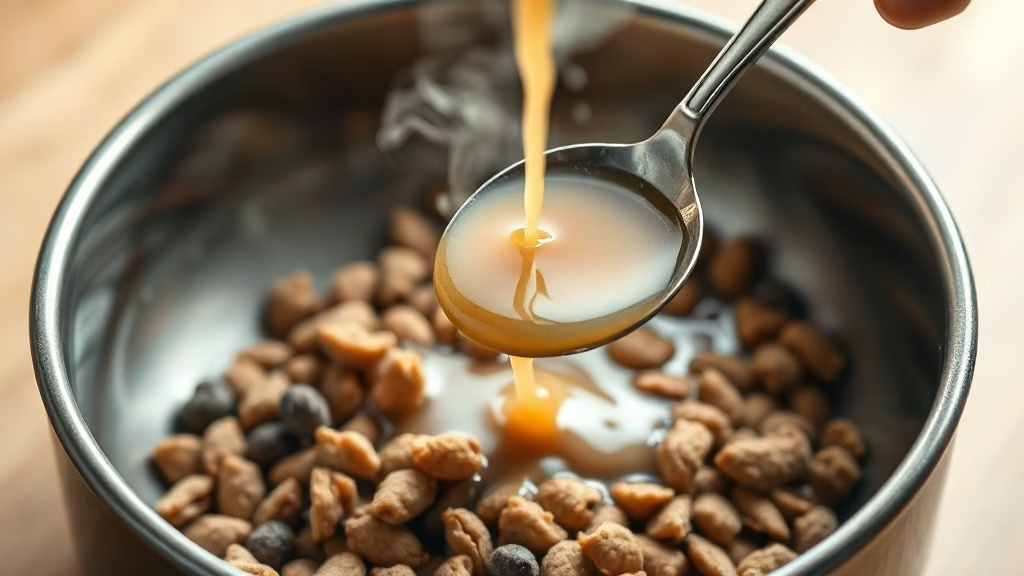
- Warm water or low-sodium broth — the simplest option. Releases more aroma from the kibble itself and adds moisture. Costs nothing and changes nothing about the nutrition.
- Freeze-dried raw toppers — a sprinkle of freeze-dried meat crumbles adds strong aroma and a protein boost without much volume, so it doesn’t meaningfully unbalance a complete kibble diet.
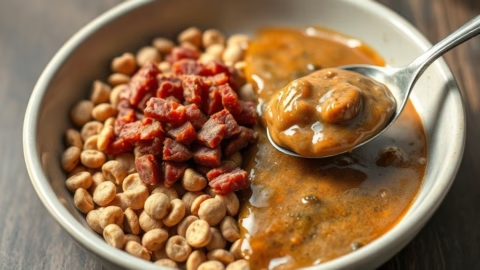
- Wet food mixed in — a spoonful of wet food changes both aroma and texture significantly. This is effective but be mindful of total calories if you’re not reducing the kibble portion to compensate.
- Bone broth (dog-specific, no onion/garlic) — good aroma boost, low calorie, and provides some hydration benefit. Homemade bone broth is easy but must exclude onion, garlic, and excess salt.
- Pumpkin puree (plain, unsweetened) — mild flavor, adds fiber, and is a common vet-recommended addition for dogs with digestive sensitivity. See our sensitive stomach guide if digestive issues are part of the picture.
What to Avoid
Toppers that are essentially treats in disguise — cheese, deli meat, table scraps with high fat or salt content — solve the immediate problem but train the dog to hold out for something better every time, making the pickiness worse over the following weeks. This is the most common topper mistake: it works once, then the dog refuses plain kibble even more forcefully the next day, requiring an ever-richer topper to get the same result.
Avoid toxic ingredients entirely: onion, garlic, grapes/raisins, xylitol (common in peanut butter and some broths — always check the label), and excessive fat, which can trigger pancreatitis in sensitive dogs.
How to Introduce a Topper Without Creating a Habit Problem
- Start with the mildest option (warm water) before moving to anything richer. Many dogs respond to this alone.
- Use it consistently, not just when refusing food. If a topper only appears after a dog skips a meal, the dog learns that refusing food produces a better meal — reinforcing the exact behavior you’re trying to fix.
- Reduce the kibble portion slightly if you’re adding a calorie-containing topper, to avoid gradual weight gain. See our portion chart for baseline amounts before adjusting.
- Rotate toppers rather than using the same one daily — variety itself is often what re-engages interest, more than any single ingredient.
When Pickiness Signals Something Else
If a topper stops working after a week or two, or if the dog is also losing weight, drinking more water than usual, or seems lethargic, these are reasons to have a veterinarian rule out a medical cause — dental pain, gastrointestinal issues, or other conditions can all present as "suddenly picky" before other symptoms become obvious.
See our tested topper picks for specific products across these categories.